Four times a year, Paris becomes the global epicentre of fashion. For nine days, hundreds of guests, models, journalists, buyers and VIP clients move continuously between showrooms, palace hotels, show venues and private dinners. For fashion houses, organising this logistics is not optional: it is a condition of brand image. A client arriving 12 minutes late to the front row is no longer in the front row. A model who misses her exit causes a chain-reaction drama. Here is, from the perspective of a transport operator, how a Paris Fashion Week logistics that holds is built — with multilingual, English-speaking chauffeurs ready to absorb international PR teams.
Understanding the specificity of Fashion Week
Fashion Week is not an event: it is a concentration of simultaneous events, on a tight perimeter, with already-saturated Parisian traffic constraints. Several specificities make the operation unique:
- Guest density — between 40 and 200 guests per show, sometimes 6 shows per day for a single house across showroom and reception
- Venue multiplicity — Palais de Tokyo, Carrousel du Louvre, École des Beaux-Arts, Gymnase Japy, Garde Républicaine, Tuileries, private mansions in the 7th and the Marais, Grand Palais Éphémère
- Time compression — 30 minutes between the end of one show and the next, with no margin
- Traffic constraints — closed streets, structural congestion, spontaneous demonstrations, weather fluctuations
- Guest confidentiality — protected identities, ambush press, the necessity of discreet arrivals
Sizing a fleet: how many vehicles?
The first question fashion houses ask is rarely the right one. It is not "how many vehicles?" but "how many vehicles simultaneously?". The difference is considerable.
A house that needs 60 transfers in a day does not need 60 vehicles: it needs to calculate its simultaneity peak. If every transfer is spread out, 8 to 10 vehicles are enough. If 30 transfers must depart between 14:00 and 14:15 toward the same destination, you need 30. Most sizing errors come from there.
On a Fashion Week mission we coordinated, the initial brief mentioned "7 vehicles over 3 days". After a show-by-show schedule analysis, the real simultaneity peak required 18 vehicles on the 11:00–13:00 slot of day 2, versus 4 on the morning of day 1. Fine peak management, rather than flat sizing, divides costs by 2 to 3.
The chauffeur schedule: the hourly matrix
Once the peak is identified, an hourly matrix is built — a single document shared between the operator, the house's production manager and the on-site team-leader. This matrix contains, per 30-minute slot, per chauffeur:
- The guest or the target to transport (by initials, for confidentiality)
- The pick-up point (hotel, showroom, station, airport)
- The drop-off point
- The mandatory arrival time (with embedded margin: -10 min)
- Specific instructions (rear door, prolonged wait authorised, etc.)
This matrix is reviewed every evening with last-minute changes sent in by the press attachés. Without it, coordination fails by the second day.
The team-leader: the on-ground pivot
On Fashion Week missions of a certain scale, a transport team-leader is positioned permanently at the house's premises or at the main showroom. Their role: dispatch chauffeurs in real time, absorb last-minute changes (a show running 15 min late, a VIP adding an unscheduled dinner), and serve as the direct link with the house's press attachés.
Without a team-leader, the operator manages from the office: decision-making delays triple. With a team-leader, a re-allocation happens in 2 minutes by radio.
Vehicle choice: Fashion Week codes
A few unwritten rules:
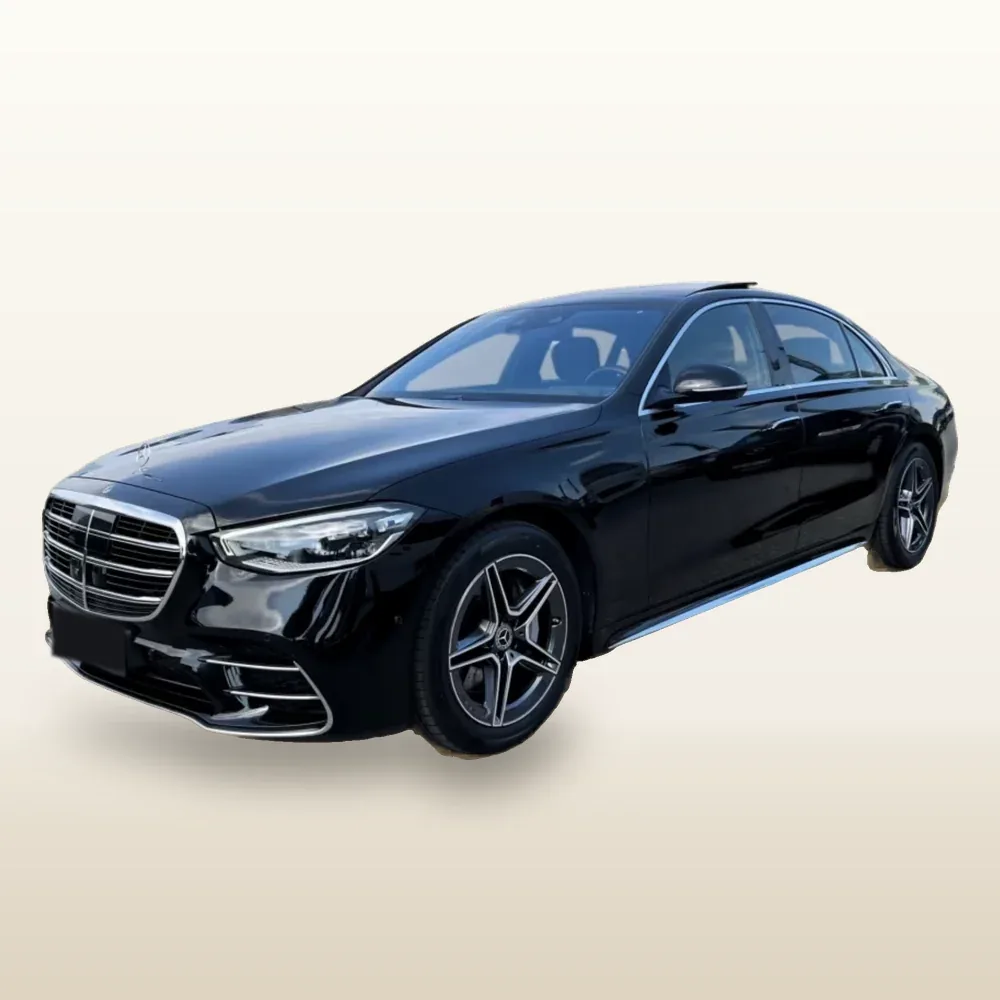
- Black Mercedes S-Class for the house's top clients and ambassadors — never anything else
- Black Mercedes E-Class for buyers, established journalists, creative teams
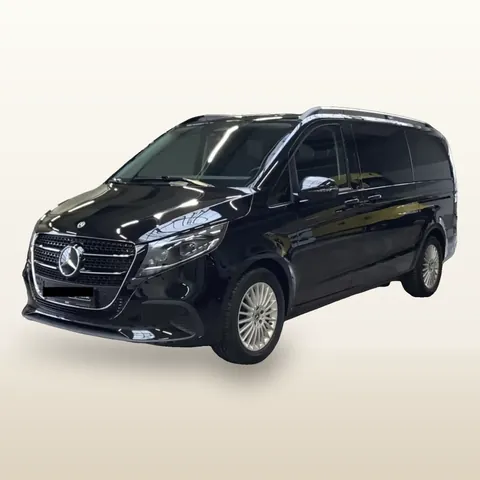
- Mercedes V-Class for film crews, equipment, model groups between fitting and show
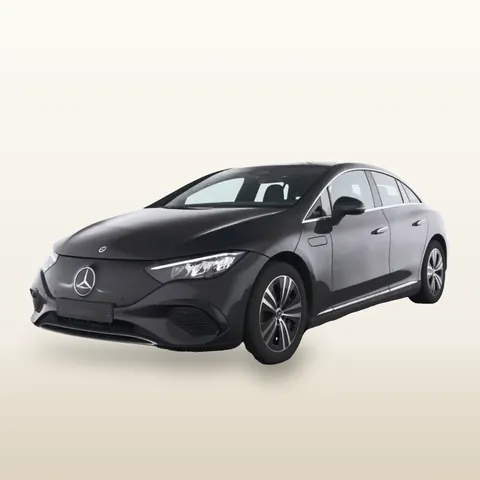
- EQE / EQV for VIP actors/actresses with a visible ESG profile
- Maximum tinted windows on every vehicle — non-negotiable on the press side
- No stickers, no branding — neutral vehicles, zero visual intrusiveness
The confidentiality angle — the NDA is not a detail
Every chauffeur working a house's Fashion Week signs a mission-specific non-disclosure agreement. This NDA covers:
- The identity of the guests transported
- Conversations overheard on board (including phone calls)
- Exact destinations (a private mansion not publicly disclosed)
- Total absence of publication on personal social networks (a selfie with a client = immediate termination of the chauffeur contract)
The operator submits a nominal list of chauffeurs to the house's security services, who can request a change without justification. This traceability is required by communication directors — do not be surprised when it is asked.
Parking zones: the invisible war
During Fashion Week, the Paris prefecture authorises short-stay drop-off zones near the main show venues. But these zones are saturated. Chauffeur logistics requires mapping out, as early as D-15:
- The zones authorised by the prefecture (often 8 to 15 spaces per show)
- Short-duration waiting zones within a 200 m radius
- Underground fallback car parks for vehicles on long waits (3 h+)
- Alternative building access points (service door, inner courtyard) for discreet arrivals
This mapping changes every season depending on the venues chosen — we rebuild it for every operation.
Qualitative case study
On a Fashion Week mission for a major international couture house, over 4 days: coordination of more than 90 journeys, up to 18 vehicles simultaneously at peak, 25 chauffeurs mobilised in rotation, two team-leaders on site. Result: zero delays on front-row arrivals, zero confidentiality incidents, zero complaints. This is the standard the houses expect — built not by the size of the fleet, but by the precision of the schedule and the quality of the on-ground dispatch.
The calendar: when to brief your operator?
The earlier you start the conversation, the better things go. The ideal calendar:
- D-90 — initial brief on estimated volume and operation days. Pre-reservation of chauffeur capacity.
- D-30 — schedule sharing, peak detection, mapping of confirmed venues.
- D-15 — chauffeur NDA signing, dress-code briefing, validation of assigned vehicles.
- D-7 — schedule rehearsal, site walk-through with key chauffeurs.
- D-1 — final hourly matrix sent to each chauffeur, phone briefing with team-leader.
A request for "15 vehicles for Fashion Week in 10 days" remains possible, but forces us to bring in chauffeurs outside the usual pool, without the same level of calibration. The difference shows on the day. For international houses (Womenswear in March/October, Menswear in January/June, Haute Couture in January/July), Precellence prioritises clients who anticipate, and our English-speaking chauffeurs are briefed weeks ahead on every show venue.
For our international clientele
Precellence serves an international clientele — United States, United Kingdom, Asia, Middle East — booking from JFK, LAX, Heathrow, Hong Kong, Tokyo, Singapore or Dubai. Our service is calibrated accordingly.
All our chauffeurs speak fluent French and English. On request: Italian, Arabic, Mandarin, Japanese, German, Spanish, Russian. Specify when booking.
Real-time tracking of arrivals from JFK, EWR, LGA, LAX, HKG, NRT, HND, SIN, DXB. Chauffeur automatically adjusts arrival to actual landing time.
All Amex cards accepted (Centurion, Platinum, Business). Receipts available in French or English. USD / GBP / EUR billing or SWIFT transfer for international corporate accounts.
Support in French and English via WhatsApp +33 1 58 96 39 43 and WeChat. A human responds, day and night.
Coordination with Plaza Athénée, Le Bristol, Ritz, Crillon, Peninsula, Mandarin Oriental. Hotel pickup or direct room delivery on request.
All our chauffeurs are bound by non-disclosure agreement. Discreet plates, no visible vehicle branding. Total discretion on passenger identity.